God’s Pictures: Unveiling Divine Symbolism in John 2
God’s Pictures
Unveiling Divine Symbolism in John 2
Summary
In this study of John 2, we explore how God uses powerful pictures and symbols throughout Scripture to reveal His redemptive plan. From the first miracle of Jesus—turning water into wine at the wedding in Cana—to rich connections with the plagues of Egypt, Jewish wedding customs, and Old Testament imagery, we see how every detail points to Christ’s transforming work and the new covenant of grace.
Key Questions
Here are some thought-provoking questions to consider as we dive into the chapter:
Who remembers the first plague God brought on Egypt?
What was the first miracle Jesus performed?
What does wine represent in the New Testament?
What was the last plague God brought on Egypt?
What was the last major thing Jesus did before being crucified?
Jesus’ First Miracle: Water Turned into Wine
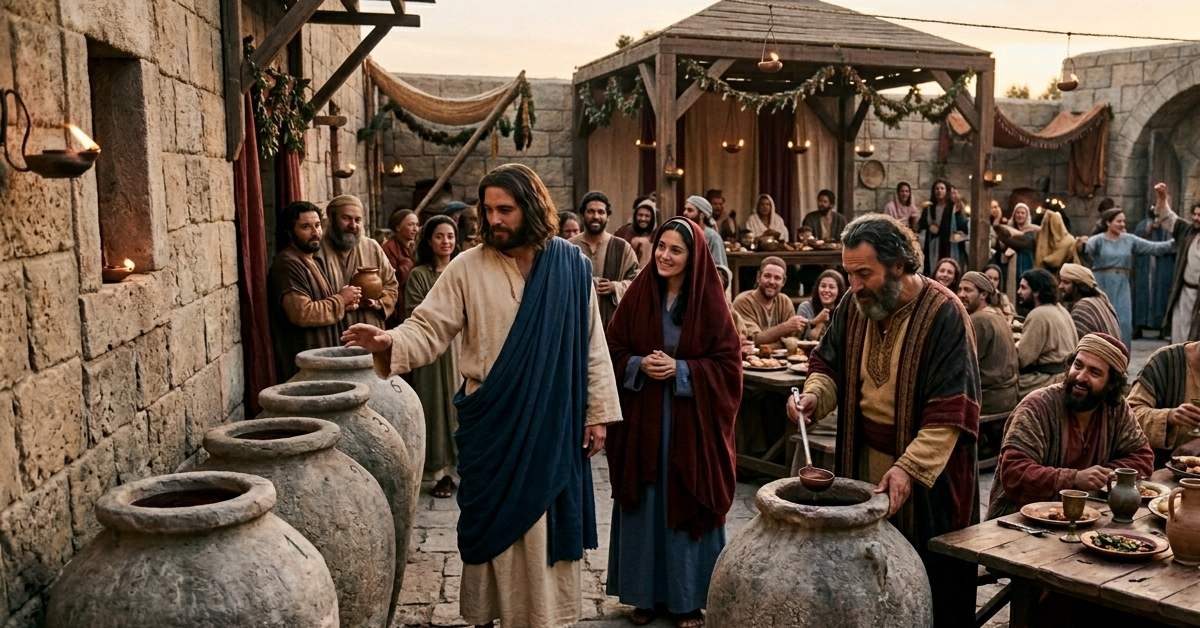
We will be looking at Jesus’ first miracle: turning water into wine at the wedding in Cana (John 2:1-10).
Before reading the chapter, take time to study the explanation of Jewish wedding customs below. These traditions provide a beautiful backdrop for understanding the deeper spiritual meaning of this miracle.
Read John 2:1-10
Jesus directs the servants at the wedding feast in Cana. Notice the six stone waterpots — symbolizing humanity and the incompleteness of the old covenant.
Key Details and Symbolism from the Miracle
Most Jewish weddings occur on Tuesday.
Fill the waterpots with water: The servants, under the direction of Jesus, were in a unique place of blessing. Jesus wanted the cooperation of men in this miracle. He could have filled the pots Himself or simply created the wine in them, but He chose to involve the servants so they could share in the work—and in the blessing.
Symbolism of the Number Six: In biblical numerology, six often represents imperfection or humanity, standing one short of the number seven (perfection). This suggests that the old Law (represented by the six waterpots) was incomplete until fulfilled by Jesus.
Ritual Purification: The pots were used for “Jewish purification rites” (washing hands and vessels), symbolizing the external cleansing of the old covenant.
Significance of Stone: The jars were made of stone, not clay, because stone was believed to be non-porous and could not hold ritual impurity.
Abundance (The Miracle): The jars were massive, holding roughly 120–180 gallons total (20–30 gallons each). This signifies the overwhelming, abundant grace of the new covenant.
Transformation of the Old: By filling these specific containers with new wine, Jesus illustrates that He is not just improving the old systems but replacing the old, insufficient systems of cleansing.
They filled them up to the brim: The waterpots were filled completely—with no room to add anything more—because Jesus wasn’t adding something to the water; He was transforming it entirely.
The First-Century Jewish Wedding: A Beautiful Picture of Christ and the Church
In the first century, a Jewish wedding was a two-stage process—Erusin (Betrothal) and Nissuin (Marriage)—typically separated by about a year.
1. The Betrothal (Erusin)
The process began with the legal establishing of the marriage covenant at the home of the bride’s father.
The Price (Mohar): The groom’s father paid a “bride price” to the bride’s family. This was financial protection for her. Picture: The price our Father paid was the life of His Son.
The Marriage Contract (Ketubah): A written contract was signed, outlining the groom’s responsibilities. Picture: This represents us giving our lives to Christ.
The Wine Ceremony: A cup of wine was poured. The groom offered it to the bride; by drinking it, she gave her consent. Once she drank, they were legally married, though they did not yet live together. Connection: At the Last Supper, Jesus said, “I tell you, I will not drink from this fruit of the vine from now on until that day when I drink it new with you in my Father’s kingdom” (Matthew 26:29).
2. The Period of Preparation
Preparing a Room: The groom would build a “bridal suite” onto his father’s house. Scripture: “My Father’s house has many rooms… I am going there to prepare a place for you” (John 14:2-3).
The Father’s Approval: Only the father decided when the home was ready. If asked about the wedding date, the groom would say only his father knew. Scripture: “But of that day and hour no one knows, not even the angels of heaven, but My Father only” (Matthew 24:36).
The Bride’s Waiting: The bride prepared her garments and kept her oil lamps ready, as the groom’s arrival would be a surprise. Picture: This is a call for us to stay pure, separated from the world, filled with the Word of God and the Holy Spirit.
3. The Marriage Ceremony (Nissuin)
The Procession: The groom and his companions arrived with a shout and the sound of the shofar. A torchlit procession followed. Scripture: “And He will send His angels with a great sound of a trumpet, and they will gather together His elect…” (Matthew 24:31).
The Bride’s Mikveh (ritual immersion).
The Wedding Feast: A week-long celebration with music, dancing, and a sumptuous feast began. Scripture: “Blessed are those who are called to the marriage supper of the Lamb!” (Revelation 19:9).
Consummation: The couple was escorted to the bridal chamber (Huppah). Picture: This represents the completion and end of God’s redemptive work.
Did Jesus Make Real Wine?
Yes. The Greek word used in John 2 is οἶνος (oinos) — the standard term for fermented grape wine, appearing 33–34 times in the New Testament. It is the same word used in Ephesians 5:18 (warning against drunkenness) and in the parables about new wineskins.
There is a different Greek word for unfermented grape juice (γλεῦκος / gleukos), which appears only once in Acts 2:13 and refers to fresh, sweet juice. John deliberately chose the word for actual wine.
Other Powerful “God’s Pictures” in the Bible
Moses Striking the Rock (Exodus 17 & 20):
God told Moses to strike the rock once (a picture of Christ being crucified). Later, God told him to speak to the rock, but Moses struck it in anger—ruining the picture. (You can’t crucify Christ twice.) Because he represented the Law, Moses was not allowed to lead the people into the Promised Land. Only Joshua (Yeshua/Jesus) could do that.
The Sabbath Day:
Six is the number of man; seven is the number of completeness and rest. The Sabbath is a picture of our rest in Christ. God commanded that anyone caught working on the Sabbath should be killed. Why? Because if you try to work your way into heaven, you will die spiritually.
Jesus Nailed to the Cross — The New Tree of Life:
The cross replaced the Tree of Knowledge that brought the fall.
• Nails through the hands: Hands represent the work of the Law, now nailed to the cross.
• Nail through the feet: Represents submission and servitude—Jesus as a “slave” to the will of God for our salvation.
• Pierced side (water and blood): “Without the shedding of blood there is no forgiveness” (Hebrews 9:22). The water symbolizes purification and the Holy Spirit.
Jonah in the Fish:
This is the “sign of Jonah” (Matthew 12:40)—three days and nights in the heart of the earth, picturing Christ’s crucifixion, death, and resurrection.
Bloopers and Poor Works
Actors are laughing — the directors and producers are not.
In the same way, poor works will not stand the test of fire:
“If any man’s work shall be burned, he shall suffer loss: but he himself shall be saved; yet so as by fire.” (1 Corinthians 3:15)
Our salvation is secure in Christ, but the quality of our works matters for eternity. Let us build with gold, silver, and precious stones—not wood, hay, and stubble.
Proverbs 3:13-18 – Happy is the
man who finds wisdom…
What is
Wisdom?
Secular
definition:wisdom
is the quality of having experience, knowledge, and good judgment,
as well as the ability to use knowledge and experience to make sound
decisions.
Biblical
Definition:Biblical
wisdom is the ability to make sound judgments and live a life of
righteousness by applying God’s truth.
Beyond
mere intellect: It is distinct from mere intelligence or
cleverness, which can be selfish or prideful. Instead, it is a humble
reliance on God’s perspective and a desire to see beyond superficial
appearances to a deeper reality.
Proverbs 9:10 “ThefearoftheLordisthe beginning of wisdom,
And the knowledge ofthe Holy
One is understanding. That word fear in Hebrew is yirah means awe
or reverence. Like standing at the edge of the Grand Canyon and looking
out.
How do we
get wisdom? James 1:5 If any of you lacks wisdom, let him ask of God, who
gives to all liberally and without reproach, and it will be given to him.
SOLOMON:
I
Kings 3:5-14 – Solomon asks for and receives Wisdom from God.
·Solomon could have asked
for riches, or defeat of his enemies, long life. God blessed him because he
sought wisdom instead of things.
·Jesus basically says the
same thing in Matthew 6:33 – But seek ye first the
kingdom of God and his righteousness and all these things will be added unto
you.
I Kings 3:24-27 – Famous
“Judgement of King Solomon” where he orders baby to be divided I Kings 4:29–34 – God gave Solomon
extraordinary wisdom; people from all nations came to hear his wisdom. He spoke
3000 proverbs and wrote 1005 songs.
34 And men of all nations, from all
the kings of the earth who had heard of his wisdom, came to hear the
wisdom of Solomon.
Proverbs:
·Solomon wrote the first 29
chapters of Proverbs.
·Chapter 30
“Sayings of Agur”
·Chapter 31 “The Sayings of
King Lemuel” (belonging to God)
What is a proverb?:Short pithy saying held to embody a general truth Examples of secular proverbs: -If you dine with the devil use
a long fork -The Cynic knows the price of
everything,but the value of nothing -Being frugle is a virtue, but being cheap is expensive
What a proverb is not:Proverbs are not promises. Proverbs 22:6Train up a child in the way he should go, And
when he is old he will not depart from it. •We know this isn’t always true. God
Raised Adam and Eve and they went off the rails.
Character
Key Traits
Typical Outcome
Representative Verses
The Wise Person
Loves instruction, fears the Lord, humble, disciplined,
speaks truth
Prov 1:22; 10:8, 10:23; 15:5, 12:15; 26:4 (do not
answer a fool) 26:11
The Scoffer / Mocker
Arrogant, mocks everything, stirs up strife, hates
being rebuked
Sudden calamity, no remedy
Prov 9:7–8; 13:1; 21:24; 22:10
The Simple / Naive
Gullible, open to any influence (good or bad), lacks
judgment
Easily led into disaster
unless they choose wisdom
Prov 1:4, 22; 7:7; 9:4–6, 16
The Sluggard / Lazy Man
Sleeps too much, makes excuses, loves comfort more than work
Hunger, poverty, ruined fields
Prov 6:6–11; 10:26; 20:4; 24:30–34, 26:13(Lion)
The Righteous
Lives by integrity, generosity,
fears God
Blessed, protected, prosperous in
the end
Prov 10:3, 11:8, 12:28
The Wicked
Violent, greedy, deceitful, oppresses others
Cut off, trapped by their own sin
Prov 10:6–7, 11:5–6, 21:7
Lady Wisdom
A woman calling in the streets, builder of a house,
offers life and favor
Those who find her find life
Prov 1:20–33; 8:1–36; 9:1–6
The Strange Woman / Adulteress
Seductive, smooth-talking, leads men to death and Sheol
Destruction, loss of honor and life
Prov 2:16–19; 5:3–6; 7:6–27; 9:13–18
The Quarrelsome Wife
Constant dripping, worse than living on a roof corner
Makes life miserable
Prov 21:9, 19; 25:24; 27:15
The Excellent Wife / Woman of Noble Character
Industrious, wise, strong, kind, fears the Lord
Praised by husband and children, blessed
Prov 12:4; 18:22; 31:10–31
The three
different Types of Fool:
Hebrew
English label
Core traits
Can they change?
כְּסִיל (kesil)
Simple stubborn fool
Thick-headed, hates correction, repeats mistakes
Sometimes (with discipline)
אֱוִיל (’ewil)
Perverse/vile fool
Loud, immoral, quick-tempered, loves evil
Rarely
לֵץ (lēs)
Scoffer/mocker
Arrogant, cynical, mocks truth and authority
Almost never
1. כְּסִיל
(kəsîl) – The dull, stubborn, “thick-headed” fool(The most common word; appears ~50 times in Proverbs)
Prov 1:22 – “How long, O simple
ones, will you love being simple? How long will scoffers delight in their
scoffing and fools (כְּסִילִים) hate knowledge?”
Prov 10:23 – “Doing wrong is
like a joke to a fool (כְּסִיל), but wisdom is pleasure to a man of understanding.”
Prov 12:15 – “The way of a fool
(כְּסִיל) is right in his own eyes, but a wise man listens to
advice.”
Prov 14:9 – “Fools (כְּסִילִים) mock at the guilt offering, but the upright enjoy
acceptance.”
Prov 15:5 – “A fool (כְּסִיל) despises his father’s instruction, but whoever heeds
reproof is prudent.”
Prov 17:10 – “A rebuke goes
deeper into a man of understanding than a hundred blows into a fool (כְּסִיל).”
Prov 18:2 – “A fool (כְּסִיל) takes no pleasure in understanding, but only in
expressing his opinion.”
Prov 26:11 – “Like a dog that
returns to his vomit is a fool (כְּסִיל) who repeats his folly.”
Prov 29:9 – “If a wise man has
an argument with a fool (כְּסִיל), the fool only rages and laughs, and there is no quiet.”
2. אֱוִיל
(’ĕwîl) – The morally perverse, loud-mouthed,
“vile” fool(More obnoxious and dangerous than the kəsîl)
Prov 1:7 – “Fools (אֱוִילִים) despise wisdom and instruction.”
Prov 7:22 (about the young man
seduced) – “All at once he follows her, as an ox goes to the slaughter…
like a fool (אֱוִיל) to the correction of the stocks.”
Prov 10:8 – “The wise in heart
will receive commandments, but a babbling fool (אֱוִיל
שְׂפָתַיִם) shall fall.”
Prov 12:16 – “The vexation of a
fool (אֱוִיל) is known at once, but the prudent ignores an insult.”
Prov 14:3 – “In the mouth of a
fool (אֱוִיל) is a rod of pride, but the lips of the wise will preserve
them.”
Prov 15:2 – “The tongue of the
wise commends knowledge, but the mouths of fools (אֱוִילִים) pour out folly.”
Prov 17:28 – “Even a fool (אֱוִיל) who keeps silent is considered wise…”
Prov 20:3 – “It is an honor for
a man to keep aloof from strife, but every fool (אֱוִיל) will be quarreling.”
Prov 27:3 – “A stone is heavy…
but a fool’s (אֱוִיל) provocation is heavier than both.”
3. לֵץ (lēs) – The scoffer/mocker – the arrogant, cynical fool(The worst category; almost impossible to correct)
Prov 1:22 – “…and scoffers (לֵצִים) delight in their scoffing…”
Prov 9:7–8 – “Whoever corrects a
scoffer (לֵץ) gets himself abuse… Do not reprove a scoffer, or he will
hate you.”
Prov 13:1 – “A wise son hears
his father’s instruction, but a scoffer (לֵץ) does not
listen to rebuke.”
Prov 14:6 – “A scoffer (לֵץ) seeks
wisdom in vain, but knowledge is easy for a man of understanding.”
Prov 15:12 – “A scoffer (לֵץ) does not
like to be reproved; he will not go to the wise.”
Prov 19:29 – “Condemnation is
ready for scoffers (לֵצִים), and beating for the backs of fools.”
Prov 21:24 – “Scoffer (לֵץ) is the
name of the arrogant, haughty man who acts with insolent pride.”
Prov 22:10 – “Drive out a
scoffer (לֵץ), and strife will go out, and quarreling and abuse will
cease.”
Prov 29:8 – “Scoffers (לֵצִים) set a city aflame, but the wise turn away wrath.”
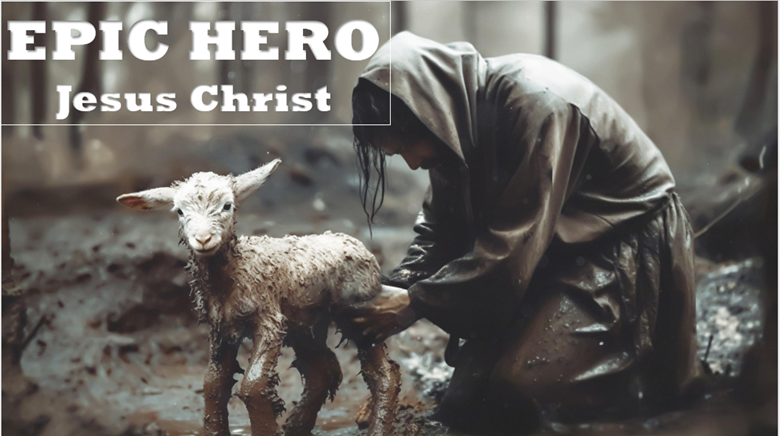
Discussed Superheroes and how Jesus is our Epic Hero. He can walk on water, he can raise people from the dead, he can not just stop bullets like Superman, but can rearrange the entire Universe so that you’re not in front of a bullet in the first place.
Discussed that we will be learning all about the life and times of Jesus and how to be a better follower of Jesus Christ.
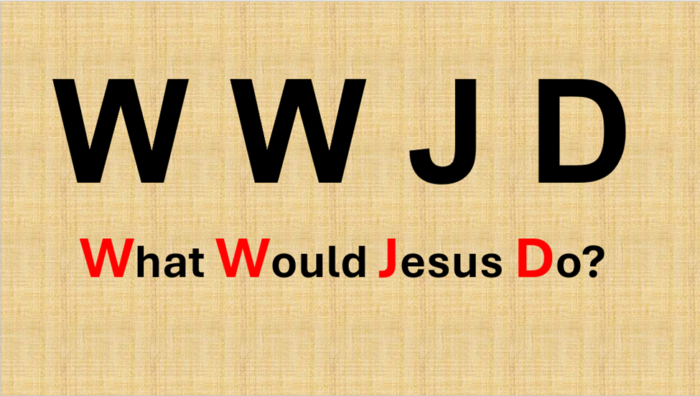
Discussed why “ What Would Jesus Do” is a nice platatude,but it’s the wrong question because: 1: It’s an intellectual question, requiring an intellectual answer. Jesus gave us a better way to handle scenarios in our lives: John 14:26 26 But the Helper, the Holy Spirit, whom the Father will send in My name, He will teach you all things, and bring to your remembrance all things that I said to you.
2: WWJD allows for everyone’s own personal Oprah, Buddah, Hindu Jesus who agrees with them on all things and sins with them, marches in the pride parades, etc… to manifest itself in our minds. We are to let the Holy Spirit bring these things to rememberance. That’s why it’s important to study the word of God, so the Holy Spirit has something to work with.
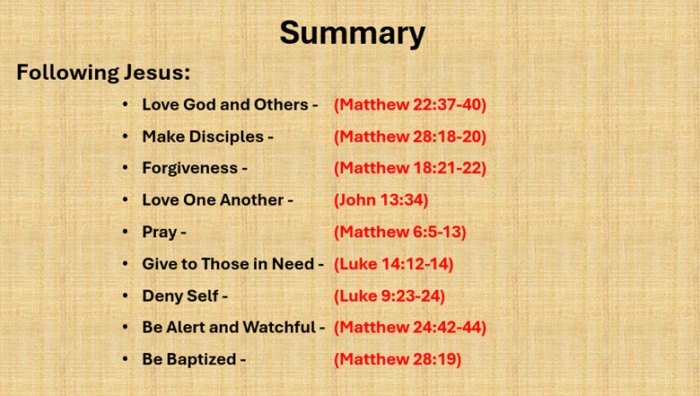
What it Means to be a True Follower of Christ:
Count the Cost
It’s not that costly to be a Christian in the United States. Our lives really aren’t in danger from our government for worshipping God. That day may come, but what is much more likely is that we could lose our sources of income, Social Security, Jobs etc… if we don’t succumb to secularism and denounce our faith. This became evident during the COVID pandemic when employers were refusing religeous exemptions for the vaccination and firing people who refused to take the jab.
We Must Follow Jesus Commandments
1: Love God and love each other:
Matthew 22:36-40 36 “Teacher, which is the great commandment in the law?”
37Jesus said to him, ”You shall love the Lord your God with all your heart, with all your soul, and with all your mind.’ 38 This is the first and great commandment.
39 And the second is like it: ‘You shall love your neighbor as yourself.’ 40 On these two commandments hang all the Law and the Prophets.”
I made the argument that not only are we no longer under the Old Testament Levitical Law, but we are no longer under the 10 Commandments either.
But this doesn’t give us license to lie, kill, commit adultery etc… because we are under Christ’s Law and it’s actually more encompassing and in some ways more stringent in the interpretation of what constitutes sin. Example, Jesus said that if we hate a brother, it’s the same as murdering him. If we look at woman in lust, it’s the same as committing adultery. This goes beyond the mere action but entails the condition of the heart.
Progressive Christians who say it’s ok to live in homosexuality because we are no longer under the law, are missing this very important concept of Christianity in that they are breaking the 1st and 2nd commandments of Christ’s law.
Another point is that if everyone walked in perfect love, we would need no laws.
2: Make Disciples and Teach Them Matthew 28:19-20
19 Go therefore and make disciples of all the nations, baptizing them in the name of the Father and of the Son and of the Holy Spirit,
20 teaching them to observe all things that I have commanded you; and lo, I am with you always, even to the end of the age.” Amen.
Christians have been fighting the wrong battles over the past 60 -70 years. We’ve been fighting cultural and political battles instead of working to get people saved. If we had 70-80% of the people in the country saved, most of our cultural and political problems would go away.
3: Forgive One Another
Matthew 18:21-22
21 Then Peter came to Him and said, “Lord, how often shall my brother sin against me, and I forgive him? Up to seven times?”
22 Jesus said to him, “I do not say to you, up to seven times, but up to seventy times seven.”
4: Love One Another
John13:34 34 “A new commandment I give to you, that you love one another; as I have loved you, that you also love one another.
35 By this all will know that you are My disciples, if you have love for one another.”
Loving one another as Christians is the litmus test for the world to tell if we are true disciples.
5: Pray
Matthew 6:5-6 5 “And when you pray, you shall not be like the hypocrites. For they love to pray standing in the synagogues and on the corners of the streets, that they may be seen by men. Assuredly, I say to you, they have their reward.
6 But you, when you pray, go into your room, and when you have shut your door, pray to your Father who is in the secret place; and your Father who sees in secret will reward you openly.”
1 Thessalonians 5:17 pray without ceasing,
Private prayer is important, but so is corporate prayer. If your married, pray with your wives. If not married, find another Christian to pray with or come to the Tuesday night prayer meeting.
6: Give to Those in Need
Luke 14:12-14 12 Then He also said to him who invited Him, “When you give a dinner or a supper, do not ask your friends, your brothers, your relatives, nor rich neighbors, lest they also invite you back, and you be repaid.
13 But when you give a feast
invite the poor, the maimed, the lame, the blind.
14 And you will be blessed, because they cannot repay you; for you shall be repaid at the resurrection of the just.”
Matthew 6:3
3 But when you do a charitable deed, do not let your left hand know what your right hand is doing, 4 that your charitable deed may be in secret; and your Father who sees in secret will Himself reward you openly.
Matthew 10:16
“Behold, I send you out as sheep in the midst of wolves. Therefore be wise as serpents and harmless as doves.“ (Use wisdom and discernment when giving, being led by the Holy Spirit)
I have a personal policy of not handing cash to strangers, and I’m not a 100% sure it’s biblical to begin with. I can’t find a verse that instructs us to do that.
1 Timothy 5:3-16: This passage provides the most detailed guidance on supporting widows in the early church: Widows “truly in need” (v. 3, 5) were to be supported, particularly those without family to provide for them (v. 4, 8). This suggests a form of means-testing, prioritizing those with no other support (e.g., children or grandchildren).
Criteria included age (over 60, v. 9), a reputation for good works (v. 10), and no alternative support. Younger widows were encouraged to remarry (v. 14) to avoid dependency.
The church was to focus resources on widows who were genuinely destitute and faithful, indicating a practical assessment of need to ensure sustainable care.
7: Deny Yourself
Luke 14:33
33 “So likewise, whoever of you does not forsake all that he has cannot be My disciple.”
Context: Jesus underscores that true discipleship involves relinquishing attachment to possessions and personal ambitions to fully commit to Him.
8: Be Alert and Watchful
Matthew 24:42
42 “Watch therefore, for you do not know what hour your Lord is coming.”
9: Be Baptized
Matthew 28:19
42 “Go therefore and make disciples of all the nations, baptizing them in the name of the Father and of the Son and of the Holy Spirit,”
If We are Obeying Jesus’ Commands and We’re Full of The Spirit We Will Produce Fruit
Part II of Teaching
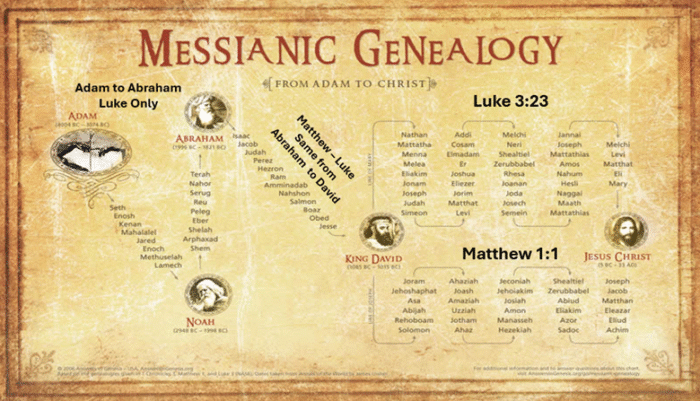
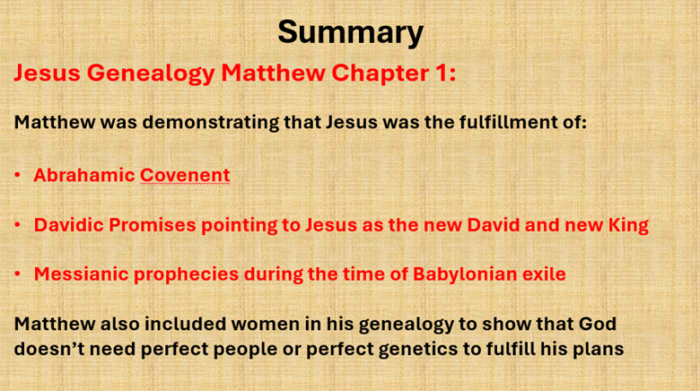
Jesus Genealogy:
Matthew 1:1
Matthew and Luke have different Genealogies: Matthew’s genealogy traces Jesus’ legal or royal lineage through Joseph, His adoptive father, emphasizing Jesus as the rightful heir to David’s throne.
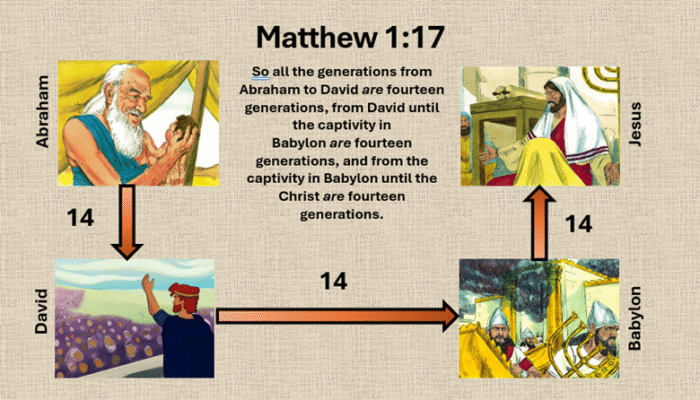
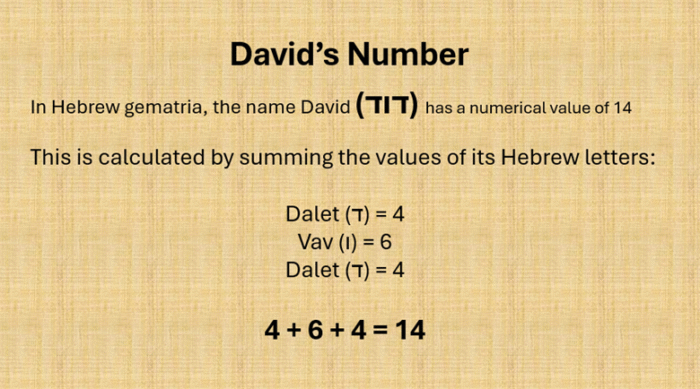
What is this 14 all about?
Matthew leaves out a bunch of people to get to compress the genealogy down to get to this 14 number
Why?
1: Matthew was trying to show Jesus is the sacrificial lamb:
The Passover Lamb is Killed on the 14th The sacrificial lamb was killed on the 14th of Nisan Exodus 12:5-6
5 Your lamb shall be without blemish, a male of the first year. You may take it from the sheep or from the goats. 6 Now you shall keep it until the fourteenth day of the same month. Then the whole assembly of the congregation of Israel shall kill it at twilight.
2: Matthew was illistrating that Jesus is the new David
Abraham was messed up, he ended up with Ishmael
Genesis 17:7 (NKJV): “And I will establish My covenant between Me and you and your descendants after you in their generations, for an everlasting covenant, to be God to you and your descendants after you.”
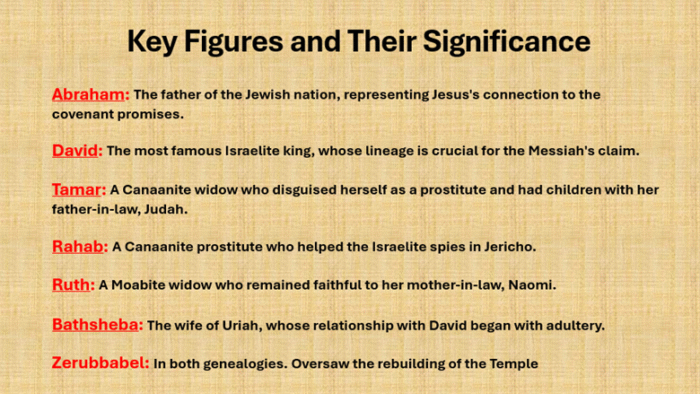
David Messed up, was a murderer, thief and adulterer
Tamar, Ruth and Rahab were not even Jewish
Rahab was a prostitute.
God is soveraign and can use messed up people to accomplish His will. He even used non-Jewish people in His geneaology.
Revelation 13:16 “He causes all, both small and great, rich and poor, free and slave, to receive a mark on their right hand or on their foreheads, 17 and that no one may buy or sell except one who has the mark or the name of the beast, or the number of his name.”
Background The book of the Revelation of Jesus Christ is the last book in the Christian bible and contains prophetic visions of events that will unfold in the end times. The book was written by John, one of Jesus’ original twelve disciples, and according to many scholars and historians, believed to be the only disciple, besides Judas who committed suicide, to not be martyred. He was however, according to early Christian writers, poisoned and boiled in oil, neither of which harmed him. John was banished to the Island of Patmos by Emperor Domition for preaching the Gospel of Jesus Christ. While he was in exile on the island of Patmos, he received visions of past and future events.
The future events John saw in his visions were apocalyptic events that describe the end of humanity as we know it, the destruction of the earth, and a creation of a new heaven and new earth. The Beast mentioned in Revelation 13 is also known as the antichrist, a charismatic leader who will convince most of humanity that he is some sort of savior that will bring peace to the earth. He will do this by first brokering a peace deal with Israel that will allow them to rebuild the Temple of God in Jerusalem for worship.
After the antichrist convinces most of humanity to follow him, he will begin a reign of terror the likes of which has never been seen in history. He will force all of humanity to receive a mark on their right hands or foreheads without which no one will be able to buy or sell anything.
We use cookies on our website to give you the most relevant experience by remembering your preferences and repeat visits. By clicking “Accept”, you consent to the use of ALL the cookies.
This website uses cookies to improve your experience while you navigate through the website. Out of these, the cookies that are categorized as necessary are stored on your browser as they are essential for the working of basic functionalities of the website. We also use third-party cookies that help us analyze and understand how you use this website. These cookies will be stored in your browser only with your consent. You also have the option to opt-out of these cookies. But opting out of some of these cookies may affect your browsing experience.
Necessary cookies are absolutely essential for the website to function properly. These cookies ensure basic functionalities and security features of the website, anonymously.
Cookie
Duration
Description
cookielawinfo-checbox-analytics
11 months
This cookie is set by GDPR Cookie Consent plugin. The cookie is used to store the user consent for the cookies in the category "Analytics".
cookielawinfo-checbox-functional
11 months
The cookie is set by GDPR cookie consent to record the user consent for the cookies in the category "Functional".
cookielawinfo-checbox-others
11 months
This cookie is set by GDPR Cookie Consent plugin. The cookie is used to store the user consent for the cookies in the category "Other.
cookielawinfo-checkbox-necessary
11 months
This cookie is set by GDPR Cookie Consent plugin. The cookies is used to store the user consent for the cookies in the category "Necessary".
cookielawinfo-checkbox-performance
11 months
This cookie is set by GDPR Cookie Consent plugin. The cookie is used to store the user consent for the cookies in the category "Performance".
viewed_cookie_policy
11 months
The cookie is set by the GDPR Cookie Consent plugin and is used to store whether or not user has consented to the use of cookies. It does not store any personal data.
Functional cookies help to perform certain functionalities like sharing the content of the website on social media platforms, collect feedbacks, and other third-party features.
Performance cookies are used to understand and analyze the key performance indexes of the website which helps in delivering a better user experience for the visitors.
Analytical cookies are used to understand how visitors interact with the website. These cookies help provide information on metrics the number of visitors, bounce rate, traffic source, etc.
Advertisement cookies are used to provide visitors with relevant ads and marketing campaigns. These cookies track visitors across websites and collect information to provide customized ads.